
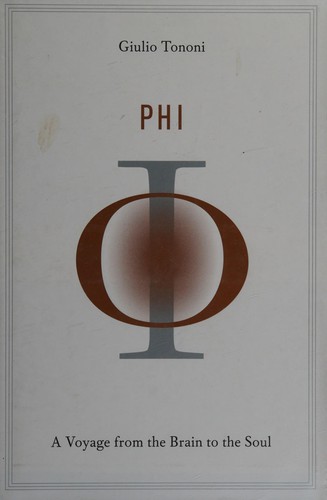
This is not a normal science book and I don’t think Tononi wants it to be. He’s a real neuroscientist, one of the actual originators of integrated information theory, and instead of writing a straightforward popular-science explainer he built this whole dreamlike framing device where Galileo, dying, gets guided through a series of encounters with Descartes, Darwin, a fictional Dr. Ika, even Alan Turing shows up, each one there to hand him another piece of the theory. When it works it’s genuinely lovely, there’s a sequence about a moth and consciousness thresholds that stuck with me for days.
Where it got shaky for me is that the fiction sometimes fights the science instead of carrying it, a few of the Galileo dialogues run long enough that I found myself skimming for the actual point buried in the flowery scene-setting, and phi as a measurable quantity, the actual mathematical core of the theory, gets gestured at more than explained, which I’ve seen a handful of readers point out is basically load-bearing for whether you buy the whole framework or not. I came away with a real intuition for what IIT is claiming, that consciousness is a matter of integrated information rather than any specific substrate, but not much of a grip on how you’d actually calculate phi for anything, and for a book this committed to its own cleverness that felt like a gap.
I’d recommend this to someone who already has some patience for philosophy of mind and wants a stranger, more literary way into IIT than a textbook chapter, not to someone looking for their first real introduction to consciousness studies. It’s a genuinely odd, ambitious object. I just don’t think the ambition and the clarity always pull in the same direction.